Joana Rafael is an architect and researcher working on ecological issues related to pollution and contamination in buildings and territories, with a particular interest in the material conditions of construction and environmental contamination. Her research investigates the materiality and limits of physical infrastructures in relation to Earth systems, as well as human–nature relations mediated by dynamics of human impact, with particular attention to radiological contamination. In parallel, she develops a practice of collaboration with artists, research and writing, as well as consultancy on projects in the fields of architecture, art, and ecology. Joana has taught courses related to Contemporary Culture at institutions including ESAP, ISCE Douro, Central Saint Martins, and the University for the Creative Arts. She is a member of CEGOT and CEAA, and co-founder of REFINERY BOARD. Joana holds a Master’s degree in Architecture and Urban Culture from Metropolis, as well as a Master’s in Research Architecture and a PhD in Visual Culture from Goldsmiths, University of London. She also obtained a specialization certificate in Healthier Materials and Sustainable Construction from Parsons School of Design. She is currently completing a Master’s in Visual Arts Education. Alongside her academic work, Joana is a farmer.
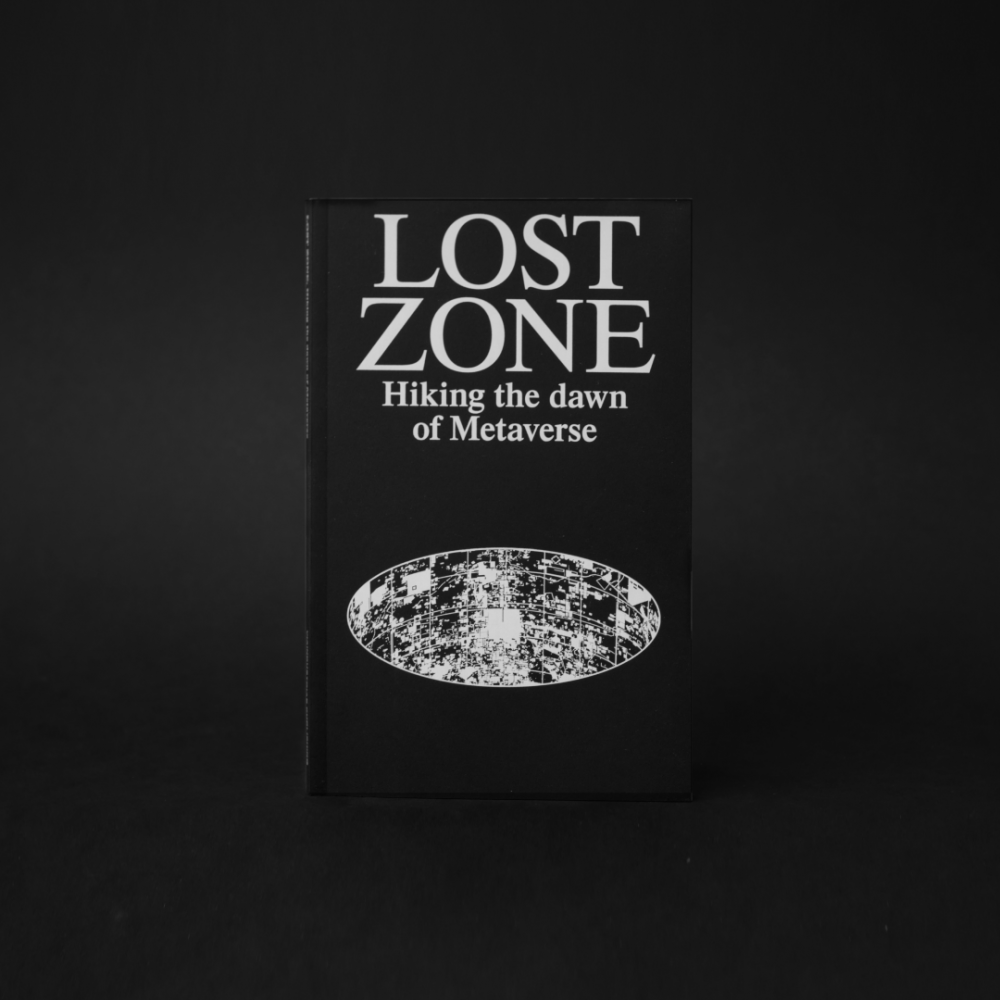
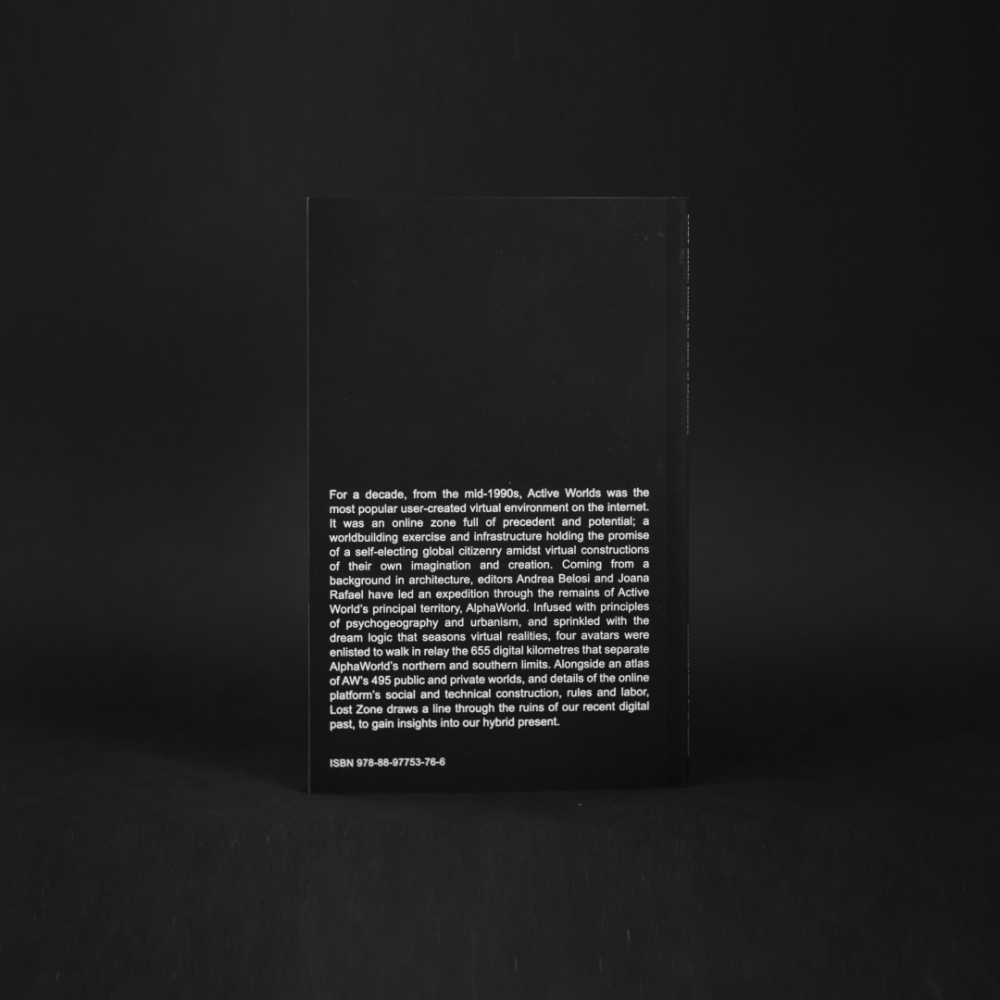
Lost Zone: Hiking the Dawn of the Metaverse
Research and Book project initiated with Andrea Belosi
Published by ViaIndustriae
With Funds provided by Creative Industries NL
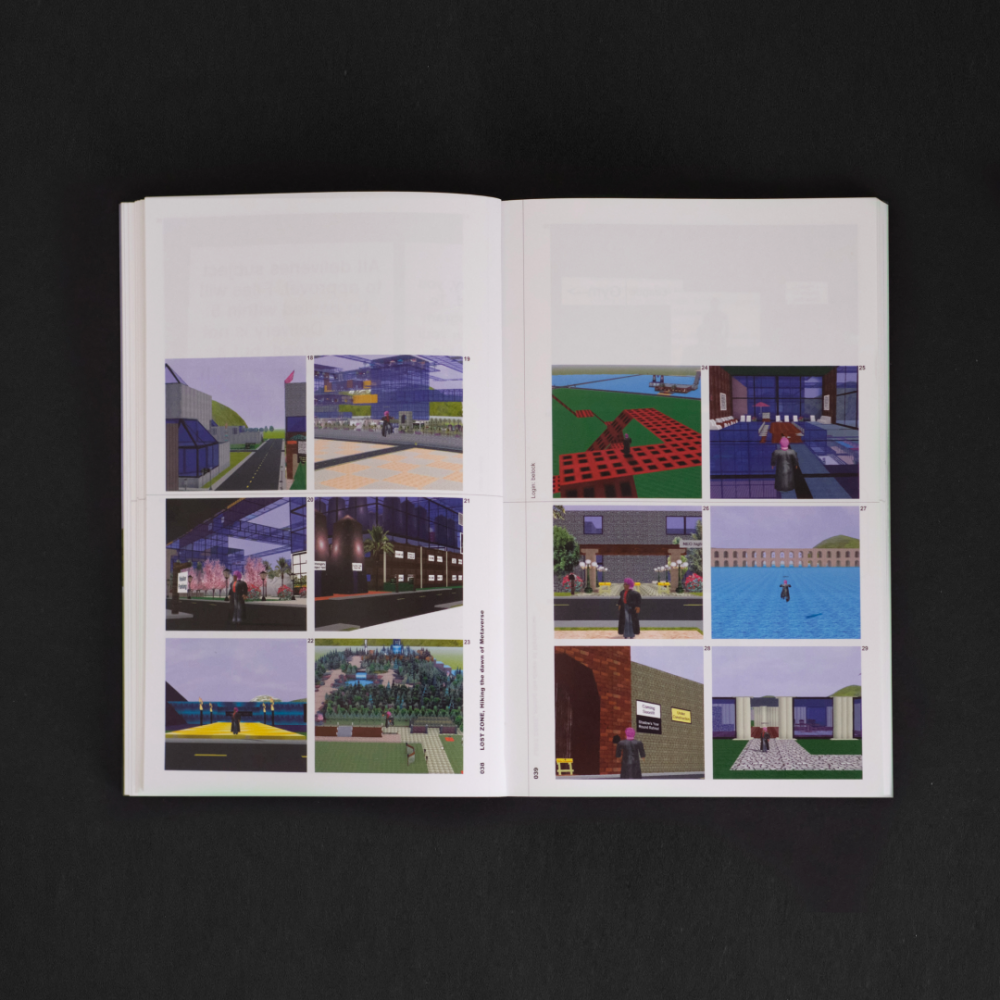
ActiveWorlds is one of the longest-running multi-user virtual environments that is currently available online. It was for a decade the most popular user-created virtual environment using avatar figures as a means for users to interact with each other, graphically immersed in the same simulation. It has been publicly accessible since the spring of 1995, the year The National Science Foundation Network (SFNET) was decommissioned, and restrictions on the use of the Internet to carry commercial traffic were lifted. From its start, AW allows users to open worlds, claim land and carve out customised spaces in-worlds, and socialize through chat in an alternative virtual reality universe. It was advertised as a platform to create anything a user can envision and a 3D global shopping mall: i.e. the El Dorado county of cyberspace. The early AW pioneers faced with an unstable system, dialling in over slow modem connections to access the Internet, were rewarded with the promise of a new World.
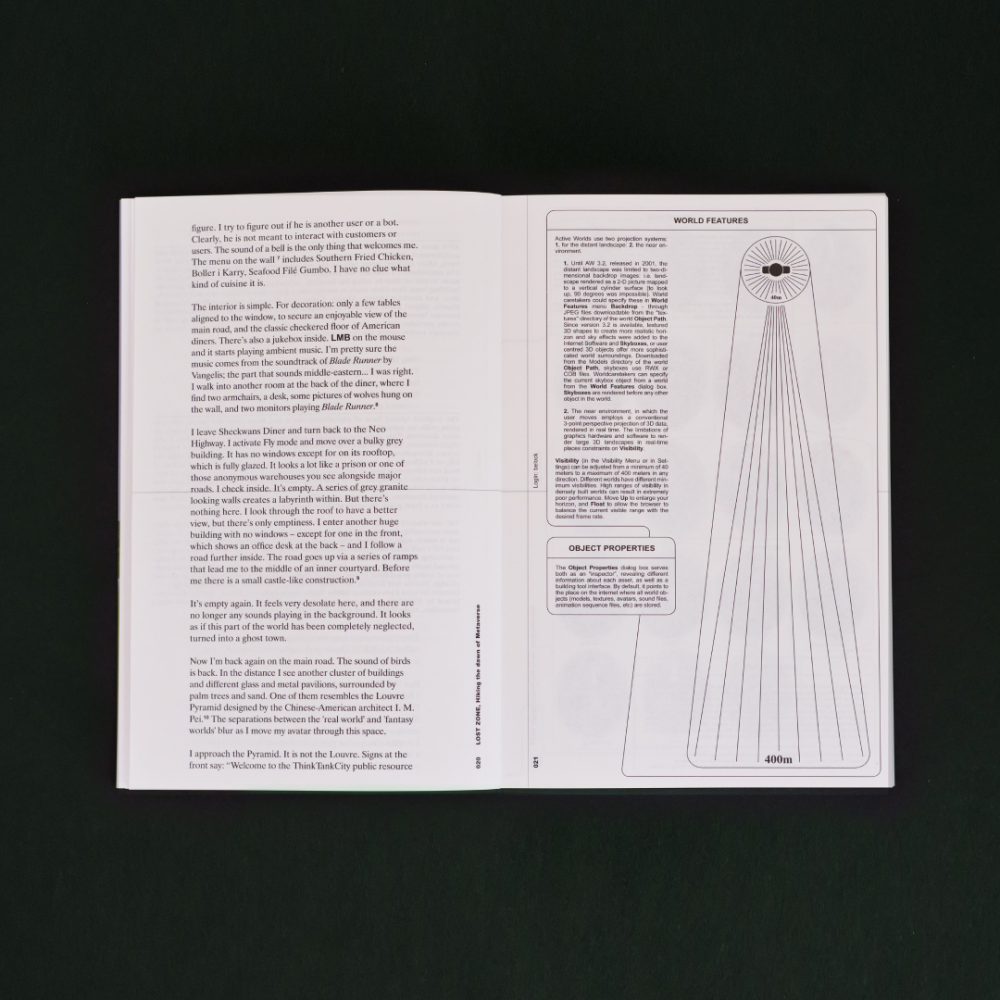
Lost Zone documents a journey across the 655 digital kilometres that separate Alphaworld’s northern and southern limits, the first built and also the - seemingly endless - flagship world of the Active Worlds (AW) universe, and of which vast amounts are in reality virtual ghost urban clusters. The world's shared earthly built environment is still fully downloaded to our computer machines, open for exploration. In terms of its cultural significance, we hope this publication helps draw attention to nearly abandoned and thus almost lost virtual worlds. The publication aims to contribute to the debate around and to the work of preserving geographies of social networking systems and engage with the ruins of its social fabric, to gain insights into our hybrid present and point towards futures yet to come.