Joana Rafael is an architect and researcher working on ecological issues related to pollution and contamination in buildings and territories, with a particular interest in the material conditions of construction and environmental contamination. Her research investigates the materiality and limits of physical infrastructures in relation to Earth systems, as well as human–nature relations mediated by dynamics of human impact, with particular attention to radiological contamination. In parallel, she develops a practice of collaboration with artists, research and writing, as well as consultancy on projects in the fields of architecture, art, and ecology. Joana has taught courses related to Contemporary Culture at institutions including ESAP, ISCE Douro, Central Saint Martins, and the University for the Creative Arts. She is a member of CEGOT and CEAA, and co-founder of REFINERY BOARD. Joana holds a Master’s degree in Architecture and Urban Culture from Metropolis, as well as a Master’s in Research Architecture and a PhD in Visual Culture from Goldsmiths, University of London. She also obtained a specialization certificate in Healthier Materials and Sustainable Construction from Parsons School of Design. She is currently completing a Master’s in Visual Arts Education. Alongside her academic work, Joana is a farmer.
Rooftop Issue
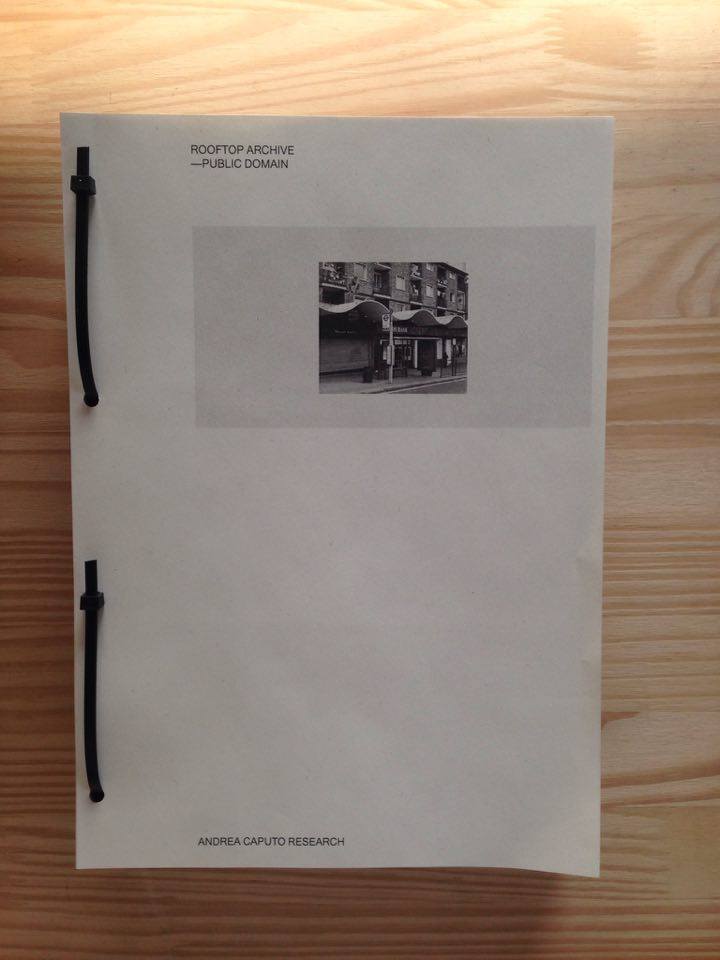
Editorial project for PUBLIC DOMAIN, a project by Andrea Caputo Research Office
on Rooftops
Rooftops have long been popular urban substitutions for yards: elements that have enhanced the environmental standards of buildings. Every time that the climate permitted, rooftops have provided space for sunbathing, the dryness of goods and of clothes, for gardening, thermal and other technical installations. Since the introduction of the elevator, an invention that made the high-up homes far more appealing, dwellers use sky-high rooftop spaces as prime locations for living quarters. These are usually built to give the owners/occupants more room and above all privacy because rooftop spaces provide a safer retreat than regular ground plots, not only with the benefit of privileged and unbroken views over surroundings.
Given this panorama, this type of settlements on the roofs of high-buildings are often rent out as luxury penthouses, historically the most prized properties of a building. However other type of settlements, particularly in rooftops of massively overpopulated and modern metropolis, are recognized as effective mechanism for adding other type of spaces within urban areas.
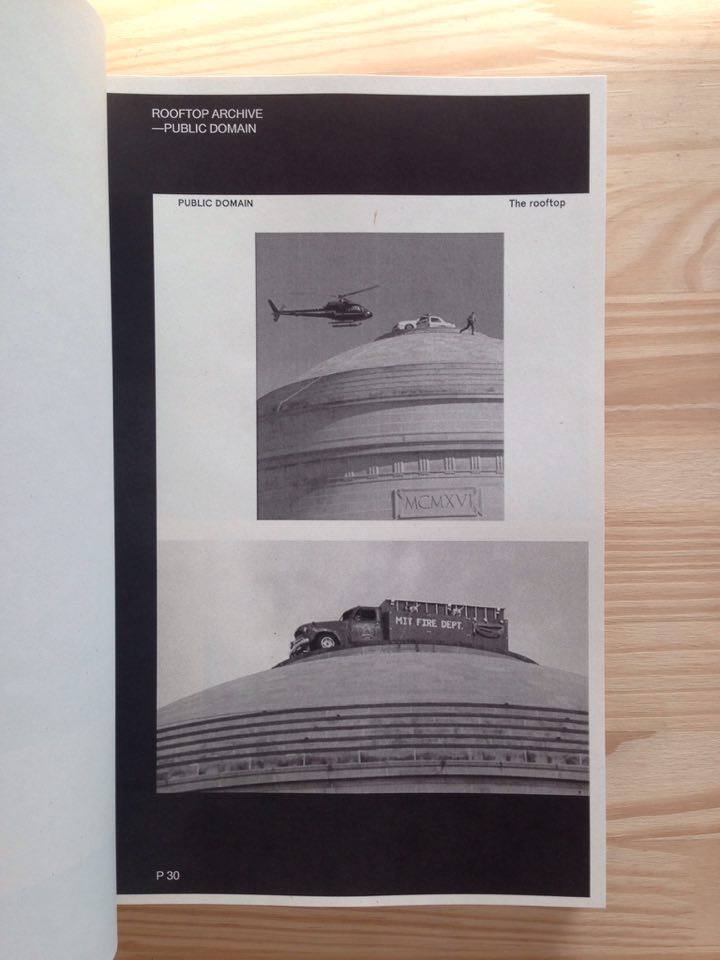
Playful and irreverent installations, aimed at promoting neighbourhood, political or open access platforms, together with self- and custom-built pods, buildings and entire villages or “shanty towns” ran now on top of tower blocks, apartment structures and skyscrapers, both for temporary and permanent, permissible and clandestine purposes. From Cairo, Caracas and Hong Kong to New York and Sao Paulo, these provide a space for a William Gibson’s style of “interstitial” communities to evolve out of the needs of a city’s people and create a complex outer surface in the free spaces of the city building’s rooftops. We may say that, as much as rooftops offer privileged views above the city and safe refuge within it, they also drive an interest to escape from the eyes and laws of the city. The fact is that to speak of a rooftop is to speak of its usage. The history of the occupation of the roof is linked to its capacity to become a space to be lived in and utilized, not only by man but his activities, whatever their (socio-political) obligations. Public Domain ́s The Rooftop issue attempts to uncover the reasons behind the blossoming of rooftops as a space beyond the video surveillance cameras enforcing the eyes of the city officials - monitoring the conduct and videotaping individuals in public spaces - and splitting the contemporary city horizontally and enabling a sort of “dark” zones, - whilst also as a space offering a more affordable route to construct and propel identities in/from the city.
Public Domain’s The Rooftop issue is interested in rooftops that have taken on a new and more varied role, rooftops that emerge not as heaven of the privileged and bohemian cultures but as the privileged space to claim against different forms of dominion at play in our and urban environments. It looks at constructs, programs and networks being established in the upper levels of the cities we visit and inhabit. Those that help create an outer margin capable of becoming a productive subversive and deceptive surface-land within cities, and this way celebrate the misappropriation of public and private space.